This website is for sale: $899, price negotiable. Write to [email protected].
Moroccan Arabic, from English
Every explanation on this site is written for an English speaker: what your language hands you for free, and what it will cost you.
100 lessons, free for goodNo accountAudio on every word
The Arabic never moves. The explanation changes with your language.
Most Arabic courses were written for one reader, then translated for everyone else. This one is written three times: for English, Spanish and French speakers. Try it on the card: switch language and the note changes.
Five of the twenty-eight letters and of the first topics. The whole course works like this.
Three ways in, in order
-
01
ب
Lesson 1 is open
The script
Twenty-eight letters, four shapes each. The wall that stops everyone, and it takes weeks to climb.
-
02
دَ
Lesson 1: greetings
Darija
The one people actually speak: health, social services, neighbours. The house specialty.
-
03
فُ
In preparation
Fuṣḥā
Newspapers, books, the news, the Qur'an. Read everywhere, spoken on the street nowhere.
28 letters, four shapes each
Turn a card over. The back tells you what that letter costs an English speaker, with a Darija word that uses it.
Plus one letter Morocco added: ڭ, for the g of Darija.
From your first word to C1
Five levels, one after another
A hundred lessons, A1 to C1. Each one has the words, one piece of grammar, a real text and five exercises.
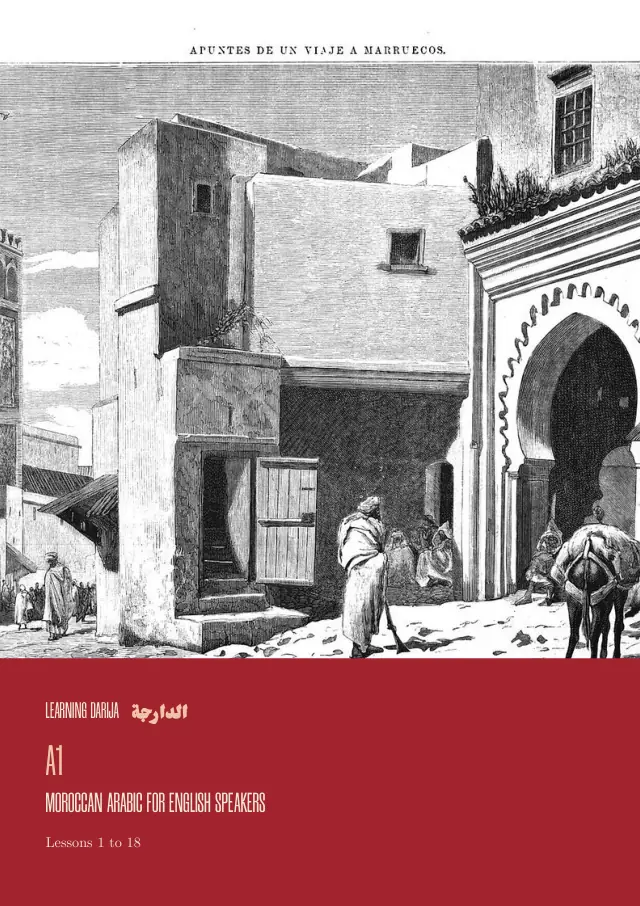
- A1 Lessons 1 to 18Greetings, the home, the family, shopping and a train timetable.18 lessons
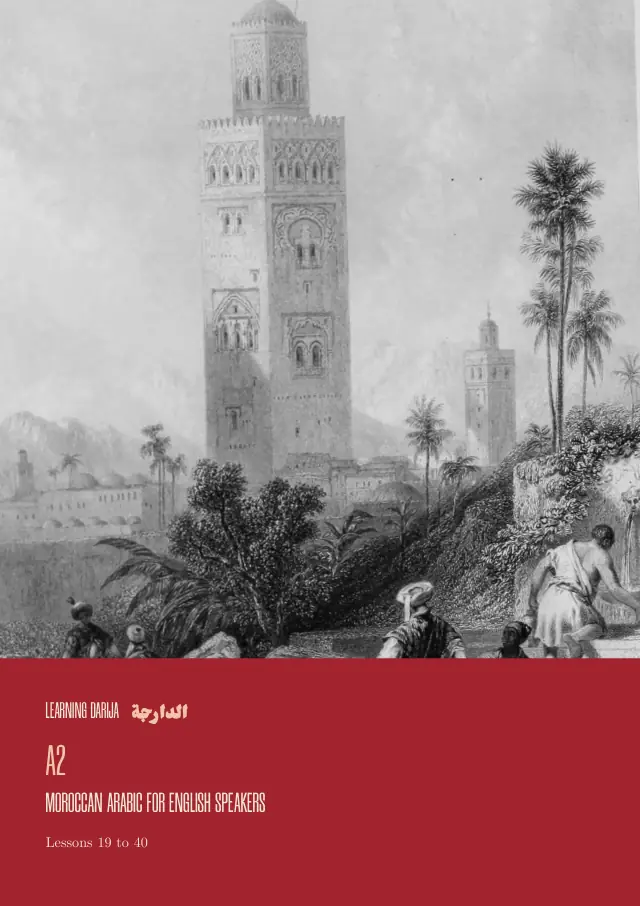
- A2 Lessons 19 to 40Past and future. Want, must and can. The first texts in prose.22 lessons
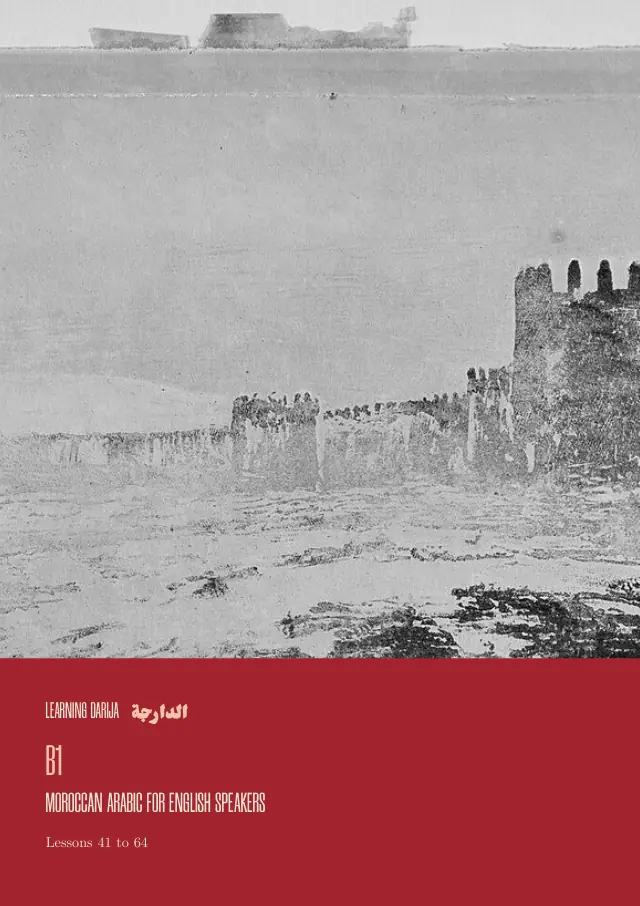
- B1 Lessons 41 to 64Derived verbs, if-clauses, reported speech, paperwork and phone calls.24 lessons
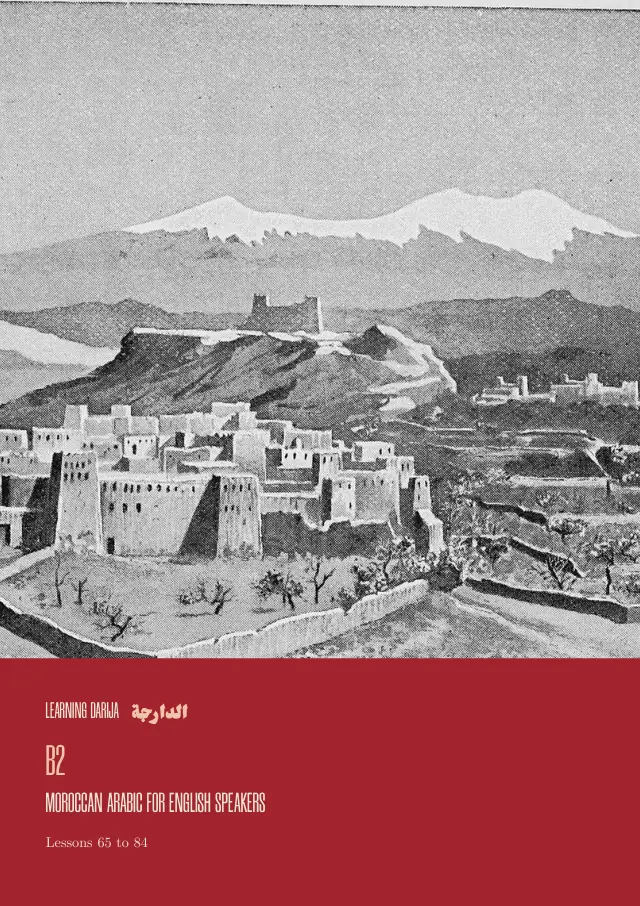
- B2 Lessons 65 to 84Real texts, unadapted: Standard Arabic beside Darija, fables, regional speech.20 lessons
- C1 Lessons 85 to 100Health, law and school, malhun poetry, and how Darija gets written.16 lessons
Five PDF books to print or keepYour place saved in this browser
Read, understand, practise
The same three steps in every lesson, from lesson 1 to lesson 100.
- 1Read
The sounds and the words first, in Arabic script with a transliteration. Tap to hear them.
SoundsWords - 2Understand
One piece of grammar, worked out from examples and explained from English. Then a real sign, card or timetable.
GrammarReal text - 3Practise
Five exercises that use only what you have seen, and a last check of what you can now do.
ExercisesCheck yourself
Try it: four lines from lesson 1A1
السَّلَامُ عْلِيكُمْs-salamu 3likum
peace be upon you
وْعْلِيكُمُ السَّلَامْw 3likumu s-salam
and upon you peace
كِي دَايْرْki dayr
how are you? (to a man)
بِخِيرْbikhir
well
Tap a line for the English.
Sugar and alcohol
Both are Arabic. Both started with the article ال glued to the front. So why did alcohol keep its al- and sugar lose it entirely?
Fourteen Arabic letters swallow the l of the article (the sun letters) and fourteen leave it: moon letters. Every al- word English kept is a moon-letter word. You have the vocabulary; the rule got sanded off on the way.
- الكُحْلalcohol (moon)
- الجَبْرalgebra (moon)
- الكِيمِيَاءalchemy (moon)
- المَنَاخalmanac (moon)
- السُّكَّرsugar (sun)
- الصِّفْرcipher, zero (sun)
- القُطْنcotton (sun)
- الزَّعْفَرَانsaffron (sun)
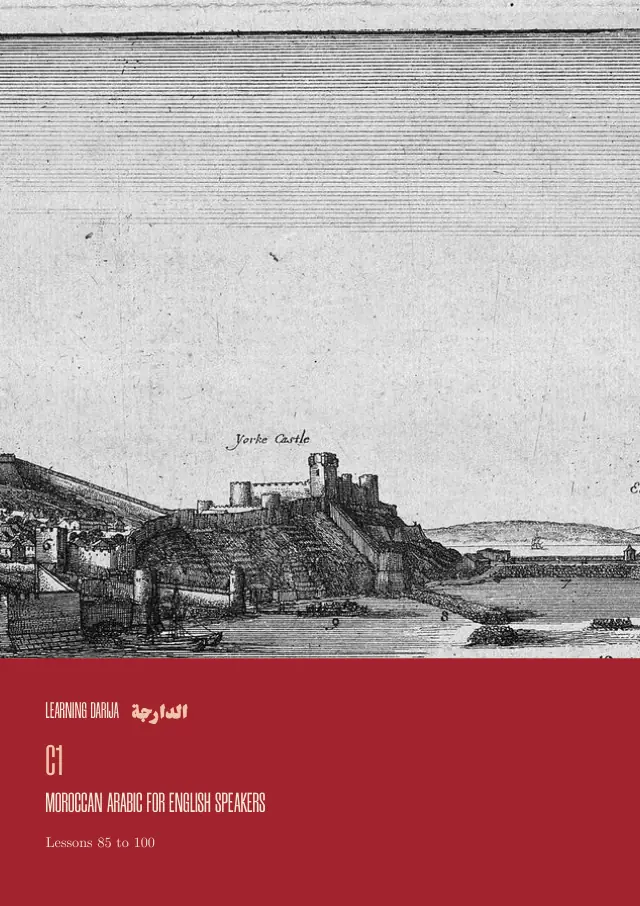
The books, in PDF
The site stays free. The five books carry what it leaves out: the three closed exercises of every lesson, the answer key and the level vocabulary. One payment, yours for life.
- Darija A1Lessons 1 to 18included
- Darija A2Lessons 19 to 40included
- Darija B1Lessons 41 to 64included
- Darija B2Lessons 65 to 84included
- Darija C1Lessons 85 to 100included
- The whole course, five PDFsOne payment, for life$9.99
- The course with audioFive PDFs and every MP3$14.99
PDF and MP3, nothing printed or posted. You download it straight after paying, in English, Spanish and French. Stripe handles the payment. No account.